Category: News

Monologue Workshop

Monologue Writing from Lived Experience

Delivered by Laura Hanna and Isley Lynn with Jess Edwards

For Long Acre Arts, Liverpool Arab Arts Festival and Traverse Theatre

Saturday 12th December 2020, 11:00 to 19:00

Hosted on Zoom

Free to attend

https://www.eventbrite.co.uk/e/monologue-writing-from-lived-experience-tickets-129347213999

Intended for all curious writers developing their craft in writing theatrical monologues, writer Isley Lynn and actor/writer Laura Hanna share their experience through the development of their current project, REVOLUTIONS.

Isley and Laura are old friends and collaborators, and Isley was inspired by Laura’s stories about her training in pole dance and how that intersected with her Egyptian heritage. The result, many conversations and many years later, is REVOLUTIONS, a play we hope to premiere in 2021. Fictional, but rooted in Laura’s lived experience, the monologue weaves together spoken text, movement, and pole to tell the story of Angele – a mixed heritage Egyptian-British woman who starts to learn pole for her own pleasure.

Hosted on Zoom, the day is structured around three topics. Come to as many as you like, and feel free to dip in and out throughout the day. There will be space in between each session for unstructured, private writing time.

In Session One (11:00 – 12:30) we’ll introduce our ways of working, and do some warm up exercises. We’ll encourage you to work from personal material, but don’t feel limited by that – feel free to weave your experience with your imagination.

In Session Two (14:00 – 15:30) we’ll explore writing exercises to help create distance between you and your subject matter, so it can be told like any other story.

In Session Three (17:00 – 19:00) we’ll be inviting you to share the work you’ve made over the course of the day on a voluntary basis. We’ll also hold a Q&A, hosted by REVOLUTIONS director Jess Edwards.

Now, more than ever, untold stories are important and necessary. It can be both therapeutic and political to tell your own story. Through sharing our craft and our approach to dramatising stories, we hope to enhance your abilities to write and stage your work. We hope to inspire you and we  look forward to being inspired through your collaboration.

SAFAR

Our friends at the Arab British Centre and SAFAR Film Festival are running an exciting development workshop in early 2021.

In collaboration with the SAFAR Film Festival and Liverpool Arab Arts Festival, Palestinian filmmaker Saeed Taji Farouky will lead a free two-day project development workshop on 16 and 17 January 2021 for up to six, UK-based early career Arab filmmakers (or filmmakers working on projects connected to or inspired by the Arab world.) Applicants must apply with a film idea in mind, but it can be anything from an initial outline on paper to an early script. You don’t need to have a fully developed idea, you just need the enthusiasm and openness to work with others on developing your story.

During the two-day workshop, we’ll discuss each project in detail and develop the film’s narrative, possibilities for funding, and explore options for distribution. The sessions will be intensive, collaborative, and confidential, so you’ll need a willingness to share ideas and foster a supportive environment. There will also be a follow-up session planned at the end of March to follow-up on your project’s progress, exact date to be confirmed shortly.

Any type of film – documentary, fiction, and everything in between – and any length is eligible. We define an early-career filmmaker as anyone from a complete beginner working on their first film, to someone who has made any number of short films but no more than one feature-length film.

We’ve tried to make the applications as simple and straight-forward as possible. Just answer a short series of questions about your filmmaking, and submit a short (1000 word maximum) synopsis of your film idea. Applications should be submitted in English, and the workshops will be held in English.

Participants will be selected by The Arab British Centre and workshop facilitator Saeed Taji Farouky. The selection process will ensure inclusion from underrepresented groups in the film industry and consider; income level, sex, sexuality, gender, race and ability. Applications will be accepted from filmmakers based anywhere in the UK however priority will be given to filmmakers based outside of London (due to the previous London opportunity). Applicants who applied for the previous workshop are welcome to apply again.

The workshop is free for all participants.

Applications are now open, and the deadline for submission is Thursday 19 November at midnight. Please do not hesitate to send any questions in the meantime to submissions@arabbritishcentre.org.uk, cc’ing becky@arabbritishcentre.org.uk,  and if you would like to submit your application in audio or video form, please let us know and we’ll do our best to help.

The Arab British Centre strongly advises candidates to save their application in a separate document. This application cannot be saved online and will be deleted if you navigate away from the page. If you do not receive an automated email confirming your submission, please contact The Arab British Centre at submissions@arabbritishcentre.org.uk

KEY DATES

29 October : Open Call launches

19 November, midnight: Open Call deadline

24-25 November: Applications reviewed

27 November: candidates contacted with decision

16-17 January 2021: Workshops (from 11am-1pm then 2-4pm)


ABOUT THE WORKSHOP FACILITATOR

Saeed Taji Farouky is a Palestinian-British filmmaker who has been producing documentary and fiction work around themes of conflict, human rights and colonialism since 1998. His latest documentary, Tell Spring Not to Come This Year, premiered at Berlinale 2015 where it won the Audience Choice Panorama award and Amnesty International Human Rights Award. It was selected for over 40 international film festivals and awarded Best Documentary 4 times. It was bought by Netflix and received a theatrical release in the UK where The Guardian gave it a 4 star review and described as “a powerful, beautifully shot documentary.”

His first short fiction They Live in Forests, They Are Extremely Shy (2016) was broadcast on Channel 4’s Random Acts, and won Best Short Drama at the Royal Television Society Awards (North East and Boarder). His following short fiction Strange Cities Are Familiar (2019) has been selected for 18 international festivals, winning Best Short Film twice.

He is the designer and lead tutor of the radical Re:Creative film school, a free alternative film course supporting people from backgrounds underrepresented in the industry and dedicated to developing a new generation of creative and engaged moving image artists.

To apply, visit: www.arabbritishcentre.org.uk/media/open-call-arab-film-development-workshop-online-edition/

Led by Taher Qassim, co-founder and former Chair of both Liverpool Arabic Centre, and Liverpool Arab Arts Festival. 

There is always a deep sadness when an old friend dies. Razak was not just a personal friend, but a friend of the festival. We had a long history together, a partnership and a shared culture. Both of us Yemeni, working in one of the country’s oldest Yemeni communities, in a city so passionate, we had much that brought us together. 

The close ties between Liverpool Arabic Centre and Liverpool Arab Arts Festival have been there from the beginning. Although a registered charity, the festival would look to LAC for its involvement in events, in engaging with the Arab community. Razak has long provided advice, support and guidance when it has been needed. 

Between us we would work hard together, although for two different organisations, with a shared purpose. Diasporic communities always have their blend of strengths and challenges. Razak, as a man of strong and clear principle, found a way to clearly navigate through both of those, through choppy waters and calm. 

The phrase, to be a leader of a community, is a simple phrase that does not do justice to the amount of work needed below the surface. There is a balance required, that allows voices to be heard from every part of a community, but that remains committed to the greater good. Razak believed in equality, with his quiet determination he believed in the power of the community. 

With this passion comes strong beliefs, and Razak was never afraid to stand up for those and to articulate them gently but firmly. It takes great courage to do this, especially when you are among friends. 

We say farewell to a man who worked hard to earn the respect of his neighbours, his peers, his community, his friends, his family and his city. He won it tenfold. At a time when it can be so hard to even countenance the positions of others that seem too far away from our own, we will always take inspiration from a friend who showed us how to do it, with grace and honesty.

LAAF is honoured to be participating in Liverpool Black History Month with our partners at Creative Organisations of Liverpool (COoL) 

We will present Yemen in Conflict alongside the University of Leeds and the University of Liverpool, a project that explores how Yemeni literature and poetry can be safeguarded, and how it can further the understanding of the situation in Yemen. Whether they evoke the iconic streets of Sana’a in Yemen, or Liverpool, the commissioned works for the project are part of a ‘living archive’ that speaks to the experiences of Yemenis living in Britain today.

 www.cultureliverpool.co.uk/yemen-in-conflict/

You can read LAAF’s statement on Black Lives Matter, from 11 June 2020, here.

Liverpool Black History Month
Culture Liverpool is proud to be supporting Liverpool Black History Month 2020, which this year is more vital than ever. The Black Lives Matter protests in response to the racist killing of George Floyd and the Coronavirus pandemic have laid bare deep structural inequalities. Black communities and anti-racists across the globe are demanding change. Creative Organisations of Liverpool (COoL) and partners recognise the role that the arts can play in affecting that change. We have come together to promote equality and justice through a range of art forms and to stand in solidarity with all of our communities facing racial discrimination.

Liverpool, with the oldest continuous black community in Europe, has a vibrant heritage, enriched by successive waves of immigration. BHM2020 shines a light on the city’s history but, like the Liver Bird, it looks out across the Atlantic for international connections. BHM2020 will celebrate the artistic excellence of the diaspora. African Superheroes will dance to Brazilian beats, Calypso is arriving on the Empire Windrush, The Sankofa bird will take flight and sculptor Faith Bebbington will protest with plants. Poetry chimes to Afro beats and Latin sounds. The Chinese Youth Orchestra, representing a community at the sharp end of Coronavirus inspired bigotry, reflects on quarantine though a musical fusion of east and west. Travelling back in time, BHM2020 will lead us through the riot torn streets of 1919 and into the heart of the slave trading capital of Europe. Booker prize winner Marlon James is Zooming in from America with Afrofuturist Ytasha Womack, bringing the WoW factor to BHM2020.

ON RECORD – Untold & Retold celebrates, honours and showcases black music on Merseyside through performance, exclusive content and debate.

BHM2020 is a celebration for everyone, good for your soul and good for society. We look forward to seeing you throughout October.

Creative Organisations of Liverpool would like to thank Mayor of Liverpool and Culture Liverpool for supporting this programme and all of our partners who have come together to celebrate Black History Month 2020.

#BHM2020 #BlackLivesMatter

We are pleased to announce that the four commissioned poemfilms for the Yemen in Conflict project will be screened on Friday 25 September at Casa Árabe, Madrid, Spain.

The screening is part of Casa Árabe’s film series devoted to Yemeni cinema, which is happening at the same time as a photography exhibition by Thana Faroq and Shaima al Tamimi.

Since it was founded in 2006, Casa Árabe has worked to achieve the goal of building bridges, strengthening bilateral and multilateral political relations, promoting and assisting with economic, cultural and educational relations, and providing training and furthering understanding about the Arab and Muslim world.

To watch the films and find out more, visit www.arabartsfestival.co.uk/yemen-in-conflict

The online Dabke classes by Hawiyya Dance Company & El-Funoun Palestinian Dance Troupe are still available to watch. You can also explore their conversations about the importance of Dabke to contemporary dance.

These digital workshops and conversations form part of our 2020 festival programme. In March, the LAAF festival team were finalising details for our festival programme. Our events programme would have taken place, as usual, across Liverpool’s key cultural venues. As the global situation around COVID-19 became more prominent in March, the LAAF team/Board made the difficult decision to move the festival online for the first time in its history.

We held honest discussions with our festival artists, partners and venues about our move online. Our key concern was to ensure that any transition online would challenge the artist and audience equally, while not artistically jeopardising the integrity of the work. While moving online has opened many new doors, not every event works digitally. How can you recreate the atmosphere of theatre or relationship between viewer and artwork? You often can’t through a screen.

Regrettably, many original festival performances had to be either cancelled or postponed until a later date.

In an alternative timeline, today, Friday 17 July 2020, would have seen Curfew performed live in Liverpool during the festival. Curfew would also have been performed in London in partnership with MARSM UK.

While Curfew isn’t happening tonight, we are working closely with Hawiyya, El-Funoun and MARSM UK to bring it to Liverpool as soon as we can.

Instead, a wider conversation began around dabke, its continuing importance to contemporary dance and how it form the foundation of Curfew.

You can watch these conversations below.

I

Members of Hawiyya Dance Company and El-Funoun Palestinian Popular Dance Troupe held a recent series of discussions on issues related to contemporary dabke and their current collaboration ‘Curfew’, which LAAF will be bringing to Liverpool in partnership with MARSM UK in the near future. We are pleased to host these discussions as part of this year’s festival:

1) What does Dabke mean to us?

2) Why is it important to fuse Dabke with contemporary dance?

3) What does ‘Curfew’ mean to us?

Participants

From Hawiyya: Shahd Abusalama, Sylvia Ferreira, Serena Spadoni, Nadia Sibany, Jamila Boughelaf, Miriam Ozanne

El-Funoun: Sharaf DarZeid, Mohammad Altayeh, Lure Sadeq, Khaled Abueram

About

Hawiyya Dance Company was founded in 2017 as an all-women’s collective, based in London, who explore identity, culture and resistance through dance. The group uses folk dance ‘Dabke’ and contemporary dance to create narrative works that explore themes such as resistance, oppression, displacement, social justice, individual and cultural identity.

The members of Hawiyya are from diverse backgrounds and nationalities, and have experience in different forms and styles of dance training. The dancers unite in their commitment to anti-racism and anti-imperialism in all they do. The aims of the company is to empower people especially women, to build community, to raise awareness of human rights and to demonstrate solidarity to the causes they support through dance and culture.

In their short time Hawiyya have achieved much success with their own productions, such as full-stage production ‘Curfew’ in collaboration with El-Funoun PDT, performed over a two sell-out nights at Rich Mix London, and one in Ramallah, or full-stage production ‘Safar: Journey’, co-created and performed with refugee and migrant women at the Shakespeare’s Globe and V&A Museum. To date, Hawiyya have showcased their artistic work at major events, such as Liverpool Arab Arts Festival, Migration Matters Festival, GreenBelt festival, Palestine International Festival, and partnered with leading artists.

www.facebook.com/HawiyyaDabke

www.instagram.com/hawiyyadabke

www.curfewdance.com

El-Funoun Palestinian Popular Dance Troupe is an independent, non-profit artistic organization that is virtually entirely volunteer-based. El-Funoun was established in 1979 by a small number of enthusiastic, talented and committed artists. Since then, El-Funoun has been crowned as the lead Palestinian dance company in Palestine, as well as among Palestinians in exile. It holds an impressive track record of over one thousand performances locally and internationally. It also produced 15 productions and over ten dance scenes. El -Funoun has won several commendation certificates and awards over the years.

Since its inception, El-Funoun has aimed at expressing the spirit of Arab-Palestinian folklore and contemporary culture through unique combinations of traditional and stylized dance and music. The Troupe’s repertoire comprises folkloric dance forms, called “dabke”, in addition to more elaborate choreographed forms that embody El-Funoun’s own unique vision of Palestinian dance. El-Funoun is widely recognized as the cultural entity that has played the most significant role in reviving and reinvigorating Palestinian dance and music folklore.

www.el-funoun.org

Supported by Arts Council England.

Curfew logos

Yemen in Conflict Poemfilms

For Liverpool Arab Arts Festival’s digital festival, we are delighted to present newly commissioned poemfilms (video works combining poetry and film) by Olivia Furber, Mariam Al-Dhubhani and Diyala Muir, created in response to original poems by contemporary Yemeni poets Ahmed Alkhulaidi, Amina Atiq and Hamdan Damaag.

You can watch the poemfilms, and read an essay by Deryn Rees-Jones, on the Yemen in Conflict project page – please click the image below:

This year’s digital festival means you will be able to watch festival events on a variety of different platforms online. This guide is intended to help you know where to watch events and enjoy our programme.

As you’ll know, many physical venues like theatres, galleries, art centres, cinemas and concert rooms are closed in the UK because of COVID-19. This has meant that, for a festival like LAAF that is hosted in these venues for our ten-day annual festival, moving to a digital programme has allowed us to continue to celebrate Arab arts and culture.

Moving to a digital programme doesn’t necessarily just mean putting every event in a video platform and allowing everyone to see it. Planning this festival has allowed us to consider what elements we love about Liverpool Arab Arts Festival and what elements of those strengths we can replicate online.

Each year, we plan our festival commissioning artists and planning performances and arts events with them, but we also work to secure a venue that fits both the artist, their audience and the work they are performing.

Even though we are digital this year, we have tried to bring this approach to our festival. Not every event works in the same space, and this is as true for digital platforms as it is for concert venues.

Our music programme, for example, will take place on Facebook and you can watch it through our Facebook page. For other events, like our film programme for example, artist rights mean we cannot make those freely available, so you have to register to watch them.

For other events, like literature events or readings, we like when we have a gathering of people getting the feel for an event, being able to participate. For these events we will be doing them on Zoom as Webinars. Other events will be available via YouTube.

To find out how to watch each event, you find out at the top of the event. If you register, you will be sent a link to the platform you will be able to watch the event – a Zoom link, a link to a video or film etc.

We have been working with artists based all over the world for this festival, and as you know, internet quality varies vastly across the world. We are also working in different timezones. This has meant that, for some events, it’s been necessary for us to record in advance. We weighed this up against the disappointment of an artist’s internet dropping out mid performance and felt, on balance, we wanted to ensure the work would be seen. The artists will still be there to answer questions and enjoy the event with the audience where they can, internet allowing!

If you have any questions or queries, please contact us at marketing@arabicartsfestival.co.uk

Celebrating Arab art and culture, musicians from the MENA region bring their sound to Liverpool Arab Arts Festival in July 2020, as the digital festival launches its programme from Liverpool.  

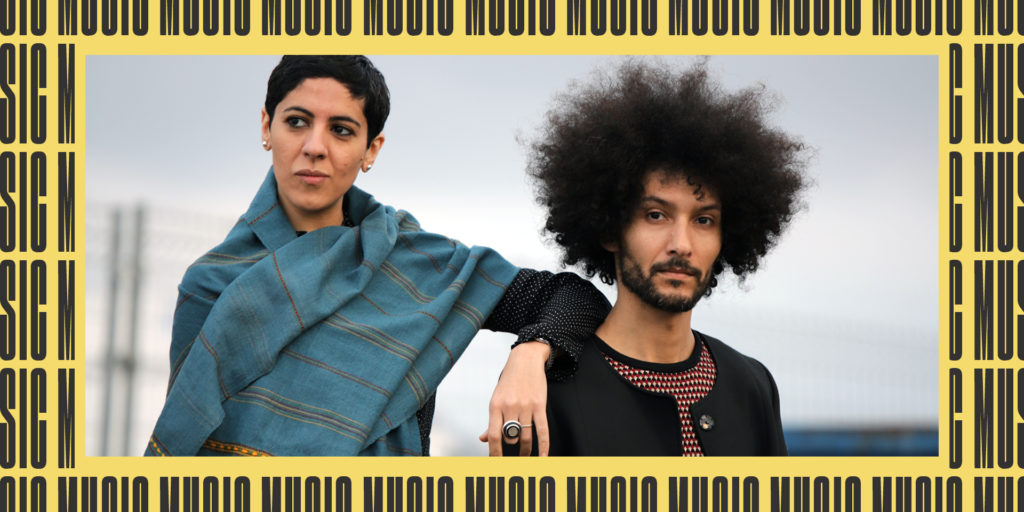
The festival launches on Thursday 9 July with Moroccan musical collective Walead Ben Selim and Widad Broco/N3rdistan. Between rock, trip hop, electro, oriental-beat with world influences, this quartet mixes with ease digital power, ancestral Arabic poetry, the targeted singing intermingling here and there with the melodies of a Qanoon and African Keys. Without falling into the trap of ethnic-electro this firey sonorisation serves as an engine to this group producing the most highly musical journey of the moment. 

Hailing from one of the most musically rich cities in the Levant, Hello Psychaleppo is the brain child of Aleppian electronic music producer and visual artist Samer Saem Eldahr who brings an intimate live performance to Liverpool Arab Arts Festival on Friday 10 July.

Both of these events are in partnership with Marsm UK.

After wowing the crowds at the closing of last year’s Family Day, the festival welcomes back Daraa Tribes as the celebratory closing event on Saturday 18 July. A fusion of ancestral tribal music and Saharan Blues, Daraa Tribes comes from the oasis town of Tagounite in the Daraa River Valley of Morocco, with each member originating from a different tribe, bringing with them diverse music traditions to create an eclectic style only to be found in the oases of the North African Sahara.


Founded in 1998, Liverpool Arab Arts Festival takes place each year in arts and cultural venues across Liverpool. In 2020, a digital programme of performance, music, film and conversation will see artists, writers, musicians and filmmakers connect virtually from their homes in Ramallah, Kuala Lumpur, London, Beirut and more.

The Festival programme includes performances from artist-in-residence, spoken word poet and activist Lisa Luxx, renowned Arabist and author Tim Mackintosh-Smith, an event in partnership with independent publisher Comma Press connecting writers in Gaza, Ramallah and Jerusalem in ‘Writing the Palestinian City’ and a film programme celebrating female directors in today’s Arab world. 

Each of the music events wil be available to watch live on Facebook.

We at Liverpool Arab Arts Festival stand firm in solidarity with those protesting against racism, anti-blackness, white supremacy, and state violence against George Floyd, Breonna Taylor, Ahmaud Arbery, Rodney King and all those who have been attacked and murdered before and since. Alongside calling for justice abroad, we must do everything within our power to ensure racial justice and equality within our own communities and workplaces as well.

Our remit is to bring the best of traditional and contemporary Arab arts and culture to diverse audiences here in the UK and internationally. We are proud to collaborate with an incredibly diverse range of artists through our work, which includes black artists who are from or have heritage in the Middle East and North Africa*, who face discrimination at home and abroad. We are asking how we can build upon the work we do to actively fight racism and anti-blackness in the UK, the Arab world, and anywhere our work reaches. We have set up a team within our board whose active role is to ensure our festival is continually thinking about and acting on these questions, not just now but into the future.

We are working through the various resources available, and we are compiling a list that we will share with you and add to, including those that have been shared by other brilliant organisations. We are reflecting upon how we can meaningfully engage. We recognise there isn’t a ‘one size fits all’ approach, and that true allyship is a lifelong commitment to learning and continual improvement.

*With knowledge that there are numerous ethnic and racial groups in the region, and that there is a lot of complexity around how people describe themselves